

“There’s nowhere to park” is one of the most familiar complaints in a busy downtown. It is also one of the easiest statements to misread.
Sometimes the supply truly is tight. But often, the problem is more specific: the closest block looks full, visitors do not know where the next option is, signs are unclear, or the rules feel unpredictable. In those moments, available parking that cannot be found might as well not exist.
For an economic development director, that perception matters. Merchants may believe parking conditions are costing them customers. Residents want their concerns taken seriously. City leaders need to show progress without committing public dollars to the wrong solution. And everyone wants a downtown that is easy to visit and good for business.
Start with the experience, not the argument
Telling merchants or residents that they are wrong usually hardens the debate. A better response is: “Let’s identify where, when, and for whom parking feels unavailable.”
That turns a broad complaint into a set of useful questions:
- Where does the problem appear – one block, one lot, or the entire district
- When does it happen – weekday mornings, Friday nights, or special events?
- What type of trip is affected – a quick errand, dinner, an employee shift, or an all-day visit?
- Are nearby spaces genuinely full, or are they difficult to find and reach
- Are the most convenient spaces occupied too long for the businesses they serve?
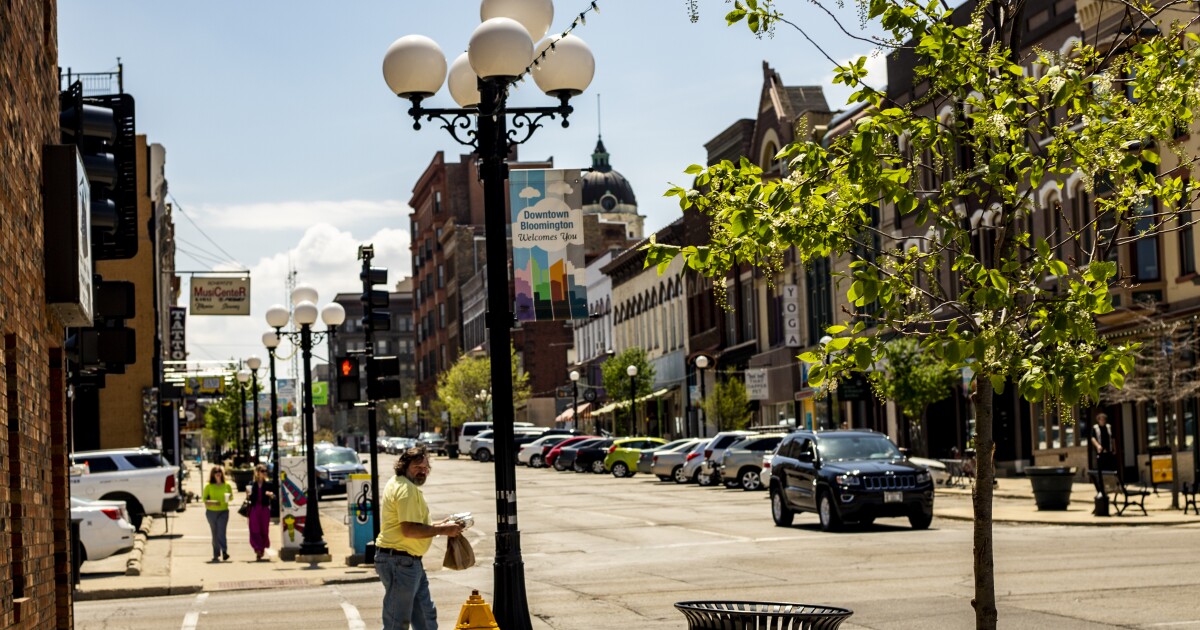 A parking complaint is a signal. The diagnostic tells you what kind of response it needs.
Measure what people actually experience
You do not need a massive study to improve the conversation. A focused parking snapshot can create a credible baseline.
A city parking portal can make that baseline easier to see and explain. For example, the Parknav City Portal brings utilization, total capacity, available and occupied spaces, street-level availability, parking restrictions, garages, and time-based patterns into one view. Instead of debating whether downtown is “full,” an economic development director can point to the location and time where pressure is actually occurring.
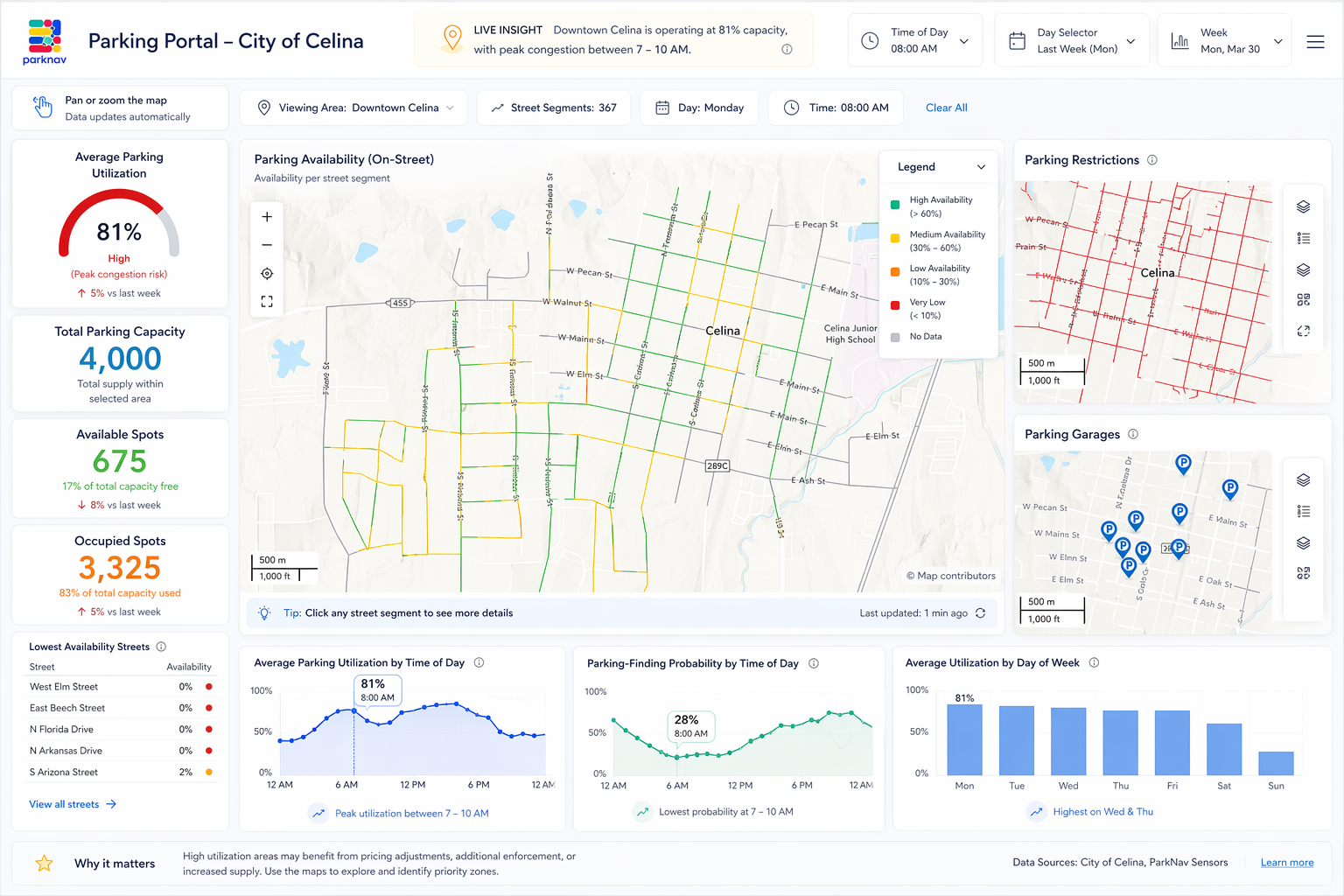 A Parknav City Portal example turns parking conditions into a shared, location-specific picture for city staff, merchants, and community leaders.
What the portal helps a city measure:
- Current utilization: See how much of the selected area is occupied and whether conditions are approaching peak congestion.
- Available and occupied spaces: Compare total supply with the number of spaces currently free or in use.
- Street-by-street availability: Identify the blocks with the lowest availability instead of treating the entire downtown as one condition.
- Time-of-day patterns: See when utilization rises and when the probability of finding parking falls.
- Day-of-week patterns: Compare typical weekdays with weekends or event periods.
- Restrictions and garages: View parking rules and off-street options alongside on-street conditions.
In the example shown, the portal reports high average utilization for the selected place and time while still showing available spaces across the study area. The street map reveals that availability is not evenly distributed. Some segments have low or very low availability while others remain more open. That distinction is exactly what a broad complaint such as “there is nowhere to park” leaves out.
→ Measure parking availability for your town
Select representative curb areas and public lots, not only the busiest block. Observe them during a typical weekday, a Friday evening, and a known event or peak period. Record basic occupancy and turnover. Then note the friction that numbers alone may miss: confusing signs, poor lighting, unclear payment instructions, an uncomfortable walking route, or outdated online information.
The goal is not to “prove” that one side is right. It is to discover the pattern.
A full curb does not automatically mean a full downtown.
If the highest-demand spaces remain occupied while a nearby public lot has room, adding supply may not be the first answer. Better signs, a clearer walking route, employee-parking coordination, or different time limits may make the existing system work harder.
If the curb and nearby lots are consistently constrained across representative periods, the case for shared-parking agreements, operational changes, or new supply becomes much stronger.
→ See how Parknav has helped small cities improve parking efficiency
Treat events and peak periods as their own condition
A system that works most days can still break down when demand arrives all at once. Friday nights, festivals, games, and seasonal events create the moments people remember. If a visitor circles the same blocks or cannot tell whether a lot is public, the conclusion is simple: “Parking downtown is impossible.”
That does not automatically mean the city has an everyday capacity problem. It may have an event-operations problem.
Before a major event, name the recommended parking areas in every promotion. Show the walk in minutes. Place temporary signs at the decision points where drivers hesitate. Give merchants, event organizers, police, public works, and communications staff the same parking message.
Afterward, review which locations filled first, where queues formed, and what visitors asked. Each event can become a practical test that improves the next arrival experience.
Show visible progress in three days
Economic development leaders are often under pressure to “do something.” A three-day parking perception sprint creates visible progress without rushing into a major capital project or waiting weeks to communicate.
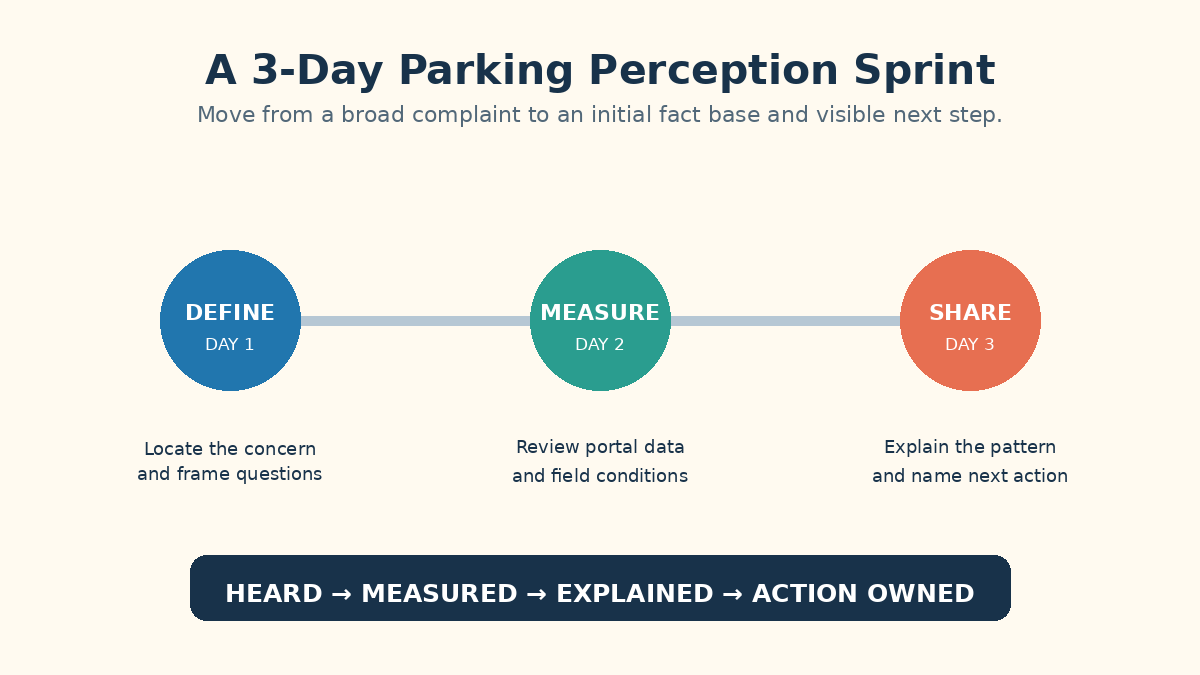 Three days is enough to replace a broad complaint with an initial fact base, a visual explanation, and a clearly owned next step.
- Day 1: Define the concern. Gather the most common complaints and translate them into specific locations, times, trip types, and questions. Select the area and periods to review in the City Portal.
- Day 2: Measure and map. Review utilization, available spaces, street-level patterns, restrictions, garages, and time-of-day trends. Pair the portal view with a quick field check of signs and walking routes.
- Day 3: Share and act. Publish a simple visual summary: what the city heard, what the data shows, where the pressure is concentrated, and what immediate improvement or deeper analysis comes next.
The bottom line
A parking complaint should never be dismissed. But it should not automatically be treated as proof that a downtown needs more spaces.
The better question is: Can people reliably find the right space for their visit?
When leaders validate the concern, define the condition, measure the experience, test a proportionate response, and report back, the conversation changes. Parking becomes less about competing opinions and more about practical choices that support businesses, visitors, and downtown growth.
Want to learn more?
Let’s talk parking…and much more !

We’d love to answer all your questions
Let us know how we can help solve all of your parking needs, parking restrictions, traffic control, smart city information….or just say hi !